Hurricane Season Checklist for Residential Air Conditioning Repair in Belleair, FL
This checklist shows how to get ready for hurricane season and what to check afterward. It helps keep residential air conditioning repair in Belleair, FL, a short call instead of a major project. A few steps before and after a storm protect the outdoor unit and the electronics inside it.
Why Storms Are Hard on Air Conditioners
Storms put an air conditioner at risk in four main ways:
- High winds can shift the unit or bend its parts.
- Flying debris can dent the cabinet and damage the fins.
- Power surges can harm the control board.
- Floodwater can reach the unit and soak its wiring.
The outdoor unit is exposed on the side of the house, so it takes the full hit from wind and rain.
Belleair sits on a peninsula between the Intracoastal Waterway and Clearwater Harbor, and many homes are near the water. That makes flooding and wind exposure worth planning for. Atlantic hurricane season runs from June 1 to November 30.
Before the Storm
Start well ahead of a warning, because residential air conditioning repair is easier when the system is prepared. These steps reduce the risk of damage:
- Clear leaves, branches, and loose items from around the outdoor unit, and trim nearby plants.
- Find the HVAC disconnect and the breaker so you can shut the system off quickly.
- Check that the outdoor unit is secured to its pad, and ask about hurricane straps or tie-downs if it is not.
- Take photos of the unit and its data plate for insurance records.
When severe weather is expected, turn the system off at the thermostat and at the breaker.
Surge Protection Basics
Power surges are a major threat to modern air conditioners, especially systems with sensitive control boards. Two types of surge protectors can help:
- A whole-home surge protector at the electrical panel gives broad protection.
- A surge protector made for HVAC, installed at the unit, adds another layer.
A technician who handles residential air conditioning repair can tell you which option suits your equipment and install it safely.
Should You Cover the Outdoor Unit?
Only use a cover made for the unit, and never run the air conditioner while anything covers it. Plastic sheeting that traps moisture can cause more harm than good.
If you do cover the unit, remove the cover as soon as the storm passes. Moisture trapped under a cover can lead to corrosion and mold.
After the Storm: Inspect Before Restarting
Do not restart the system right away. Walk through these checks first:
1. Look at the outdoor unit for debris, dents, or shifting.
2. Make sure the unit is still level and fastened to its pad.
3. Check the wires and pipes that run from the unit to the house for damage.
4. Confirm that the power has been steady for a while.
If the unit was under water at any point, do not turn it on. Floodwater can reach the electrical parts, and running a flooded system can turn recoverable damage into a failed system.
Check Indoors Too
Storm damage is not only outside. Check the indoor unit, too, and look for these signs:
- Roof leaks above an air handler in an attic or closet.
- Wet or sagging ceilings or drywall near the system.
- A musty smell near the vents or the indoor unit.
Water near the indoor unit can mean a leak that needs attention before the system runs again.
When to Call for Residential Air Conditioning Repair
A storm can leave problems that are not obvious. Call a technician if you notice any of these:
- The system will not start, or it trips the breaker.
- The unit makes grinding, rattling, or squealing noises.
- Air from the vents is warm or weak.
- The system turns on and off again and again.
- You see bent fins, loose wiring, or a damaged cabinet.
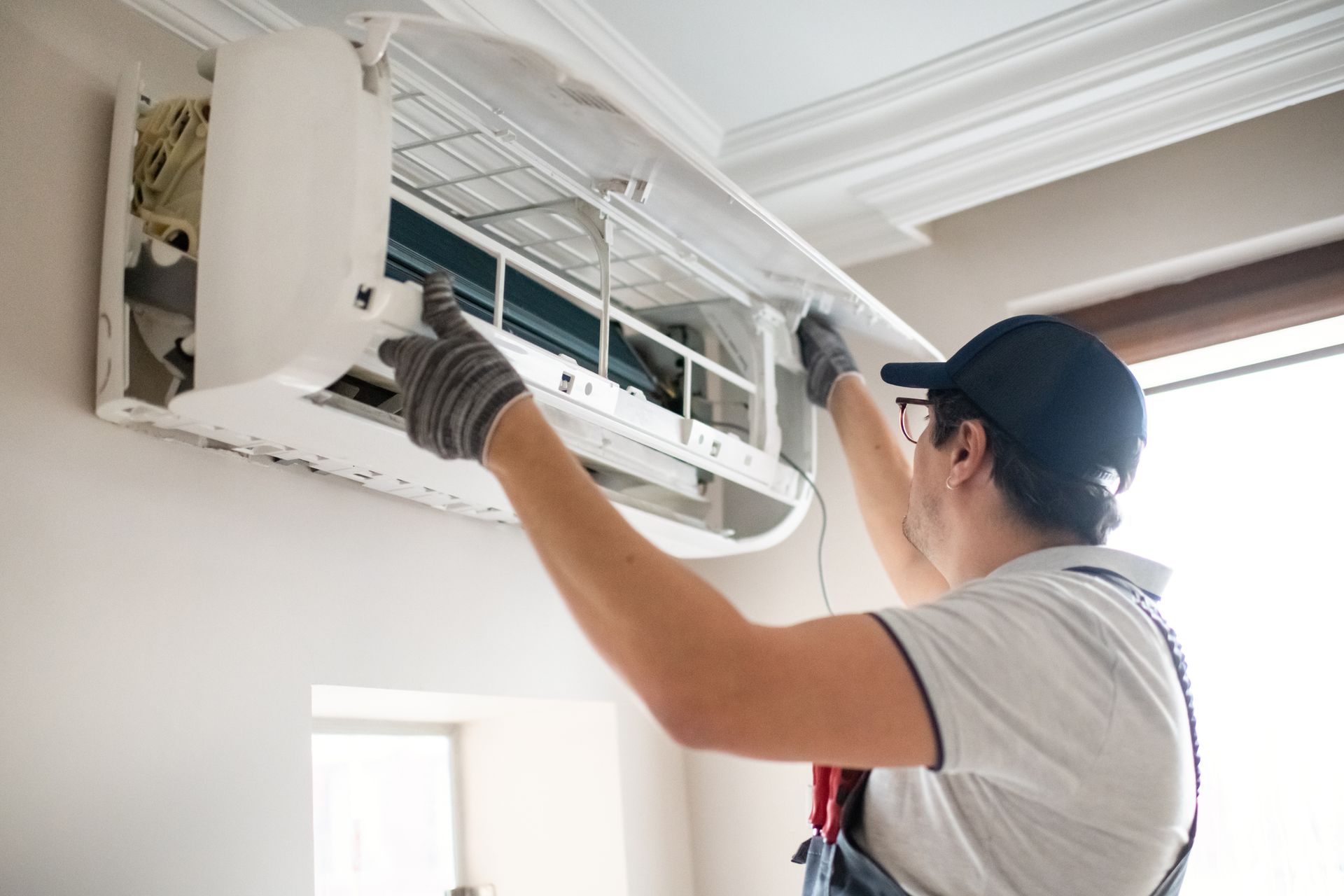
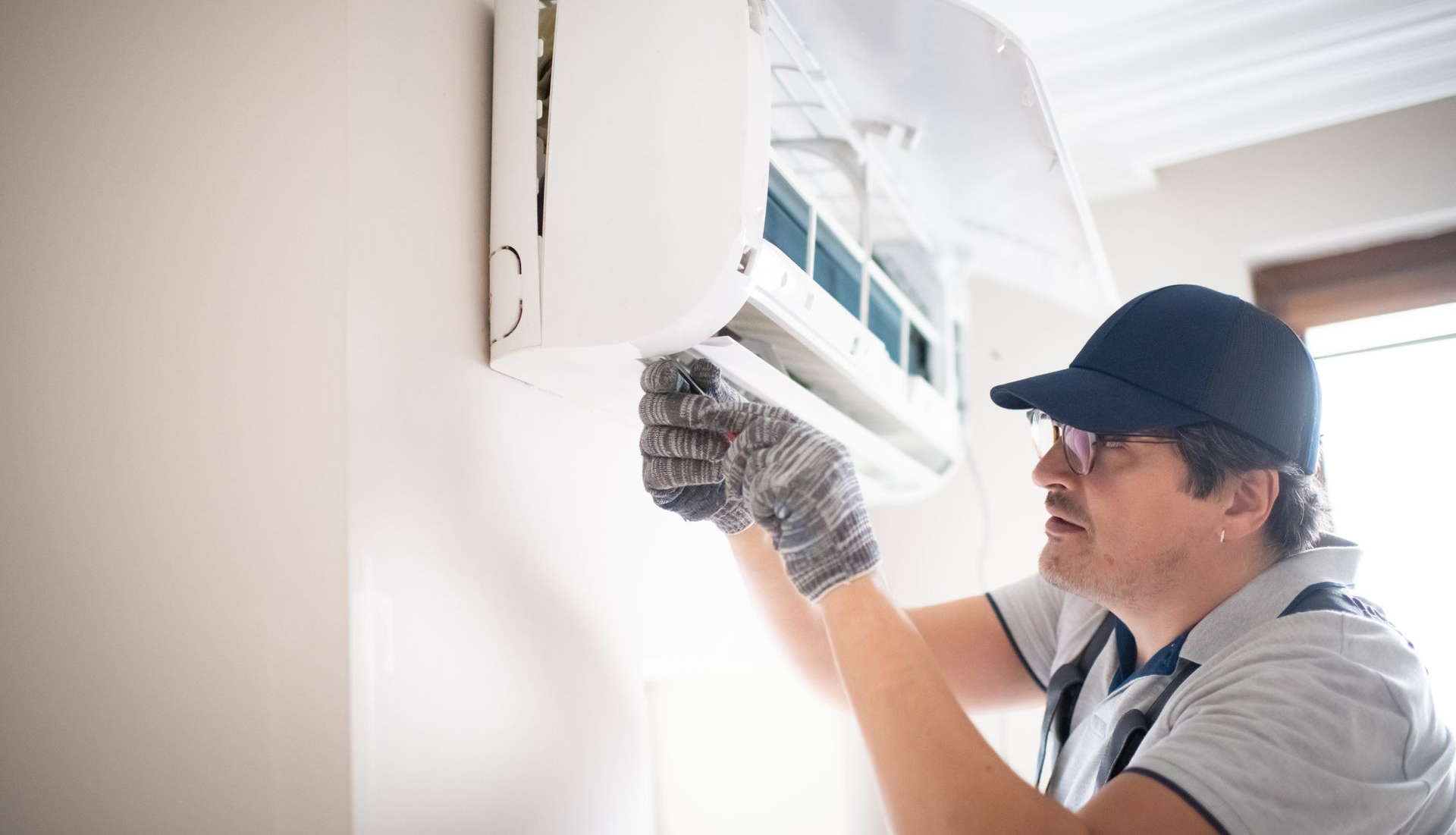
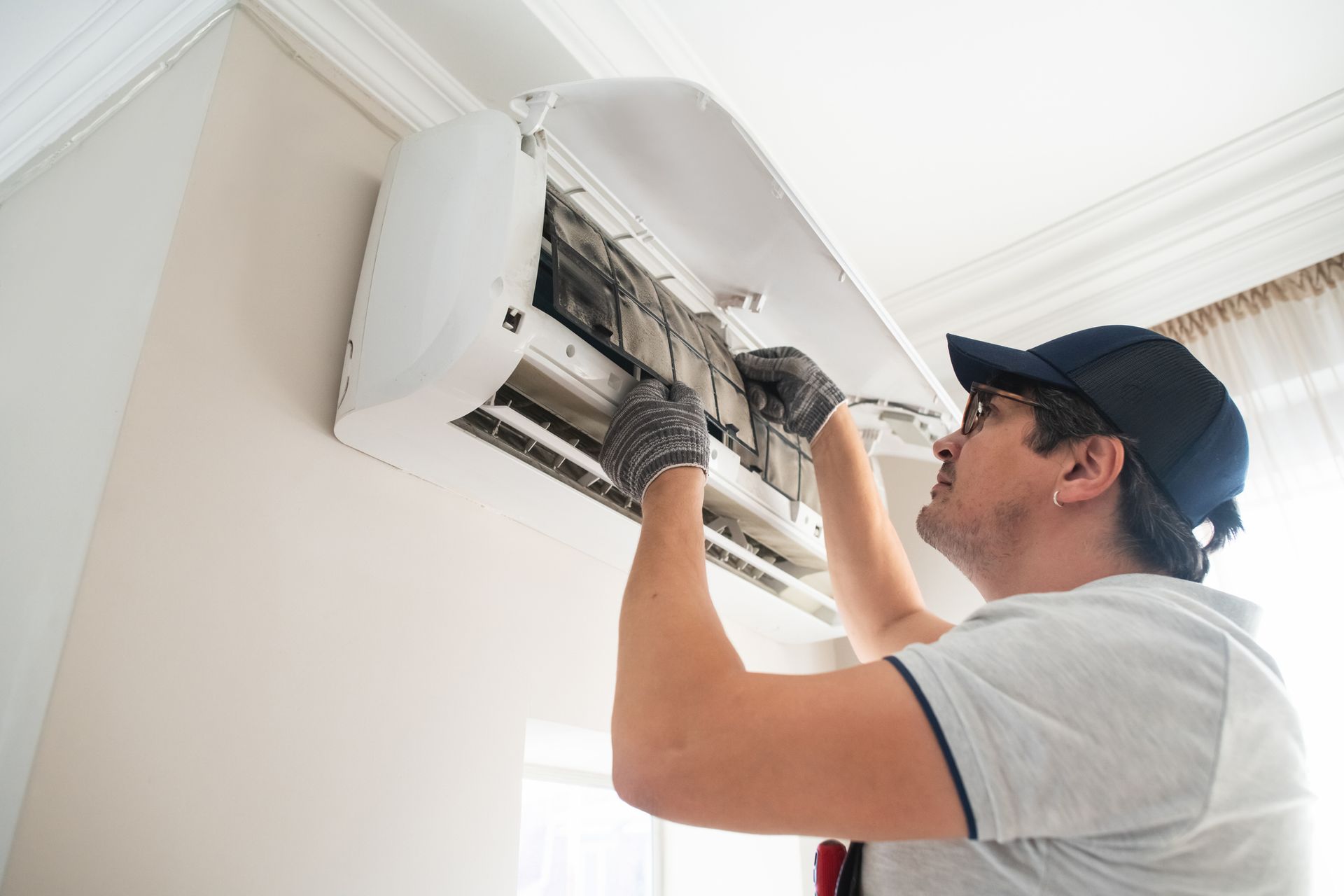
A technician can assess the system, diagnose the problem, and explain the repair before any work begins.
Raising and Protecting Units Near the Water
Some owners of waterfront homes take extra steps to protect the outdoor unit. Common options include:
- Raising the outdoor unit on a taller pad so a small amount of standing water does not reach it.
- Placing a new unit farther from the water, in a spot that drains well.
- Making sure the ground around the pad slopes so water drains away from the unit.
Ask a technician which options make sense for your home. The right choice depends on the equipment, the location, and local requirements.
Frequently Asked Questions
Can Storm Damage Raise My Energy Bills?
Yes. Damage to the fins or the fan makes the system work harder. That can raise your power bill even when the home still feels cool.
When Should I Schedule an AC Check Before Hurricane Season?
Book a visit in spring, well before the season begins. That leaves time to fix small problems before a storm shows up in the forecast.
Get Your System Checked Before the Next Storm
B&J Heating & Air Conditioning, based in Largo, FL, offers residential air conditioning repair serving Belleair with free estimates and certified technicians. You can read customer feedback on the B&J Heating & Air Conditioning Google profile. Call (727) 281-8718 or contact us to schedule an inspection, and see the page on AC repair.